Translated from the German: https://www.die-tagespost.de/kirche-aktuell/weltkirche/thomas-schirrmacher-neuer-generalsekretaer-der-weltweiten-evangelischen-allianz-art-216365 (by Michaela Koller, March 11, 2021).
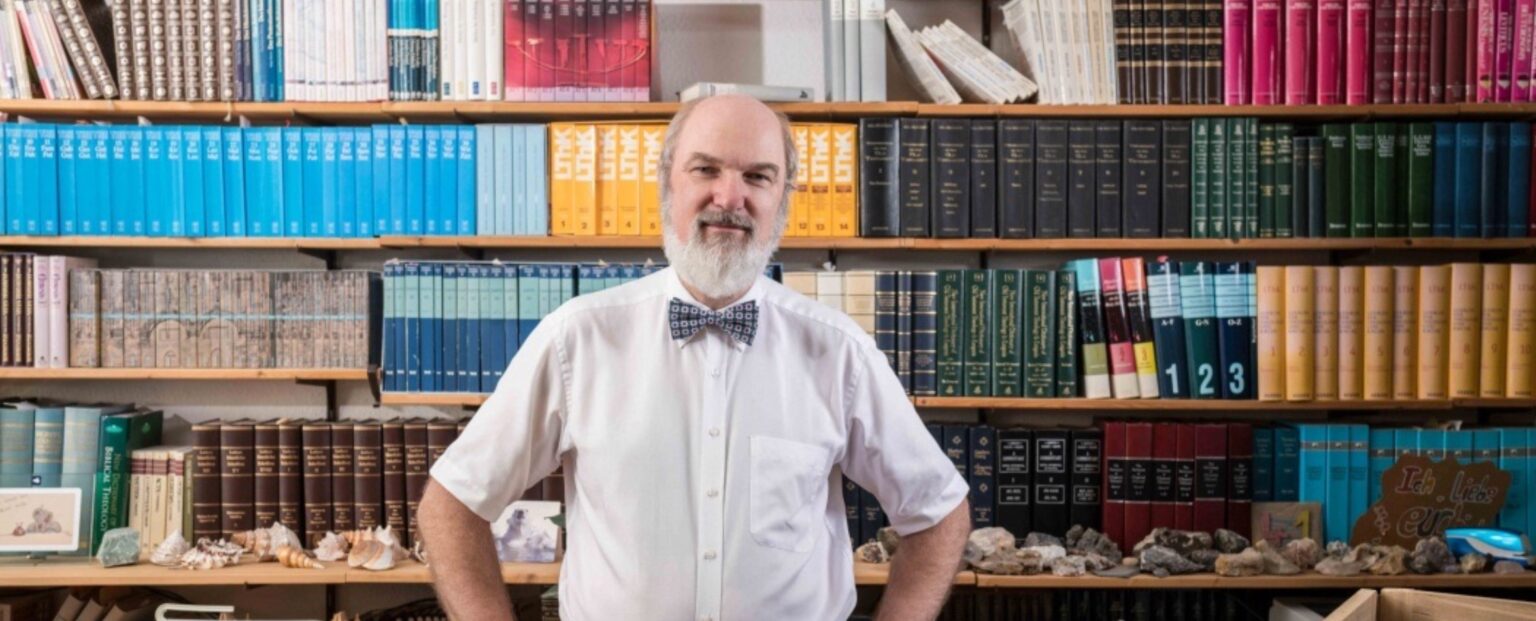
Bishop Thomas Schirrmacher, a theologian and religious scholar from Bonn, is the new General Secretary of the World Evangelical Alliance. He thus represents the second largest religious organization in the world after the Catholic Church.
Since his inauguration last Saturday in Cologne, the new Secretary General of the World Evangelical Alliance (WEA) is Bishop Thomas Schirrmacher, a theologian and religious scientist from Bonn. He thus represents six hundred million Protestants united in this largest evangelical umbrella organization. Even if this news does not make the front pages of the gazettes: the WEA is, after all, the second largest religious organization in the world after the Catholic Church. Since 2016, Schirrmacher has been the leading bishop of the “Communio Messianica,” a community especially for converts from Islam to Christianity.
Comes from a dynasty of scholars
He is married to the scholar for Islamic studies Christine Schirrmacher. At ecumenical meetings, Thomas Schirrmacher will be able to meet Pope Francis at eye level in the future, although this will probably not change anything in their dealings with each other: The two leaders have already met dozens of times and also talk to each other on the phone.
The Evangelical Alliance has a flat hierarchical structure and sub-communities enjoy the greatest possible independence. The vast majority of Christians under this umbrella live in the southern hemisphere.
Schirrmacher comes from a dynasty of scholars. The historian Friedrich Wilhelm Schirrmacher was his great-grandfather, and his father Bernd Schirrmacher, a professor of communications engineering, was on the board of a missionary society and a pioneer in the evangelical school movement.
Thomas Schirrmacher studied in Switzerland and the Netherlands, where he earned his first doctorate in 1985. After a doctoral thesis in the U.S. and three honorary doctorates, his dissertation on “Hitler’s War Religion” in the field of religious studies was completed in Bonn in 2007. Schirrmacher began his teaching career as early as 1983, working at academies and universities in Germany, the USA, Brazil and Romania. More than a hundred books bear his name on the title, as author or editor.
Traveling networker for human rights
Among his works are numerous books on specific human rights topics such as religious freedom, persecution of Christians and human trafficking, concerns for which he was already able to forge alliances with high representatives of religious communities and government officials as WEA vice secretary general for many years. As a traveling human rights networker, the first German to hold this post became internationally known, and his election last fall came as no surprise to observers.
“Mission belongs to the essence of the church”
Translated from the German: https://www.die-tagespost.de/kirche-aktuell/aktuell/mission-gehoert-zum-wesen-der-kirche;art4874,216590 (by Michaela Koller, March 11, 2021).
The new Secretary General of the World Evangelical Alliance, Bishop Thomas Schirrmacher, talks in an interview with the “Tagespost” about his ecumenical relationship with Pope Francis, about Christian mission and how he met persecuted Christians as a child.
(Picture: Bishop Thomas Schirrmacher, along with Pakistani human rights lawyer Aneeqa Anthony, speaks to Pope Francis about enslaved Pakistani Christians who toil in brick factories.)
You published the book “Coffee Breaks with the Pope” in 2017. How does Pope Francis prefer his coffee?
In the breakfast room and also during breaks, I have observed that he drinks black coffee.
And you yourself?
I drink it with milk and sweetener.
Beyond coffee habits and denomination, there are nevertheless unifying factors. In 2013, you rejoiced at the election of Cardinal Jorge Mario Bergoglios as head of the Catholic Church. What was known about his ecumenism at that time?
In contrast to Brazil, where one cannot exactly speak of a good relationship between the Christian confessions, it was known about Argentina that the whole atmosphere between our friends and the Catholic Church there, which he helped to shape considerably, was positive. This began with listening to the other person in the original and appreciating him in principle. There was the story of his mother teaching him decency toward a Salvation Army officer and explaining all the good they do there. When big evangelistic events took place, he showed up there even without an invitation to pray at the opening. From the beginning, it was clear that he is a relationship person. Experience shows: When there are personal relationships at the highest level, it is possible to talk about theologically contentious issues as well. Pope Francis said early on that the word sect would be removed for fellow Christians. This allowed us to sort out what are really contentious issues and what are just silly rumors about each other.
(Quotation: „There are issues where we would have liked to see them that they be dealt with more intensively. That is the case with the issue of persecution of Christians.“)
How alive is ecumenism at the top level now? How is cooperation taking shape?
It has actually gone on positively as expected. In the presence of high-ranking Catholic representatives, ecumenical relations always were very formal. Since Francis has been pope, it is no longer decisive with which level of the hierarchy one talks. While I think highly of Pope Benedict XVI as well, it was a more formal approach back then. It meant that you could only talk to someone in the Vatican whose rank was at the same level. Francis, after all, has changed that at the Vatican. If he needs an expertise from us, then we can send the expert in question ourselves. But there are also topics where we would have liked to see more intensive work. That is the case with the issue of the persecution of Christians.
You have already left your mark as Associate Secretary General, as a member of the Religious Freedom Commission and as head of the Theological Commission. For example, the fruitful cooperation is also based on the document “Christian Witness in a Multi-Religious World,” which the major Christian churches adopted in the summer of 2011. How did this come about?
The process began in 2006 when the Vatican, together with the World Council of Churches, wanted to draft a statement with representatives of other religions on peaceful mission. The increase in anti-conversion laws in many countries gave rise to this. I was brought in by the World Council of Churches as an expert, but saw very quickly that in doing so, those who do not do mission would make a statement about what those who do mission should do, and in turn they would see that as an attack. I suggested at that time that we bring in those who are actually responsible for mission, including the World Evangelical Alliance, and have them explain what they mean by dialogue and peaceful cooperation. I was of the opinion that we Christians should work this out among ourselves first.
In this way, we were able to prove that we are capable of making a statement about this with substance. At the beginning, we thought it would never be implemented. But as time went on, I realized that Pope Benedict is also on the side of the WEA. The World Council of Churches in Geneva approved it only very shortly before it was published. The bases on which we agreed were always biblical. The basic argument at the beginning is: mission is part of the essence of the church. Jesus gave us that. But mission must be done in the spirit and according to the commandment of Jesus, such as that of charity. In the end, Pope Benedict only wanted to change one word in our draft and crossed out three printing errors with his small handwriting. That was all. (He laughs).
Often in the past, parts of the World Evangelical Alliance network have been portrayed as a disruptive factor in interreligious dialogue. Where do you think this prejudice comes from?
Until the document on “Christian Witness in a Multi-Religious World”, there have been serious disputes between the World Council of Churches and the World Evangelical Alliance about the relationship between dialogue and mission. The WEA has never understood dialogue to mean cutting back on mission. As a result, they have taken some appeals for dialogue as doing less mission. The attitude of finding any kind of dialogue suspect dominated.
(Quotation: “Respect for other cultures is something I imbibed it with my mother’s milk.”)
I know you as the president of the International Council of the International Society for Human Rights (IGFM). How does a Reformed theologian and religious scholar come to the topics of religious freedom, human trafficking and slavery, for which you are in demand internationally as an expert?
My parents have been on the board of an international missionary organization all their lives. When new missionaries came, a courtesy visit to us was always part of the process. They were usually younger couples, but also older, experienced ones like the preacher Billy Graham. As a child, I first came into conscious contact with the subject of persecution of Christians when we had Festo Kivengere, the Anglican archbishop from Uganda, as our guest in our home. He was persecuted by Idi Amin, then wrote the book “I Love Idi Amin.” That also inoculated me early on against racism, because my parents held such guests in high esteem. I really imbibed respect for other cultures with my mother’s milk. I later lived for a long time in two worlds: a career as a theology professor and, at the same time, a secular career in sociology and comparative religion, through which I came to the field of human rights through the specialty of ethnic minorities. It was brought together since I started to deal with persecuted Christians during my studies. That actually gave birth to all my ecumenical work.
You unflinchingly raised persecution of Christians with the Grand Imam of Badshahi Mosque in the Pakistani city of Lahore, Maulana Abdul Khabir Azad, in 2017. You went to see him with human rights lawyer Aneeqa Anthony. Did you feel understood?
I think that the thanks for protecting Christians in Lahore was fully received. I later learned that this story was passed on among Muslims and that he stood by it when the issue came up only among Muslims. After all, he was considered a brave man among them as a result. I believe that the relationship changes when we thank Muslims for help. However, this only concerns the big picture, not the fate of individuals affected by violations of religious freedom.
(Quotation: “If you asked the Christians (in Iraq), they would have wanted something that would directly intervene in their daily situation.”)
We were able to follow a special Islamic-Christian meeting in Iraq just this weekend. Prime Minister Al-Kasimi declared in Baghdad that in the future March 6 would be a holiday as the National Day of Tolerance and Coexistence. What hopes does this raise on the Christian side?
Again, this only concerns the big picture. It reminds the majority that Christians are also human beings. You can’t condemn them quite so easily now because you talk nicely to each other. If you were to ask the Christians there, they would certainly have wanted something that directly intervenes in their situation. They can hardly refer to anything through this.
Will you do anything differently as secretary general than you did in the position before?
I am now responsible for the budget and the appointment of staff in several hundred offices. Thanks to the support of deputies, I have the opportunity to focus on external relations and special problems. These are tasks that are not much different than before.